
Measuring Security for Retail and Commercial Centers
A Framework for Public Access, Tenant Interfaces, and Property Resilience
Security Is Determined by How Defense Is Structured
Architecture
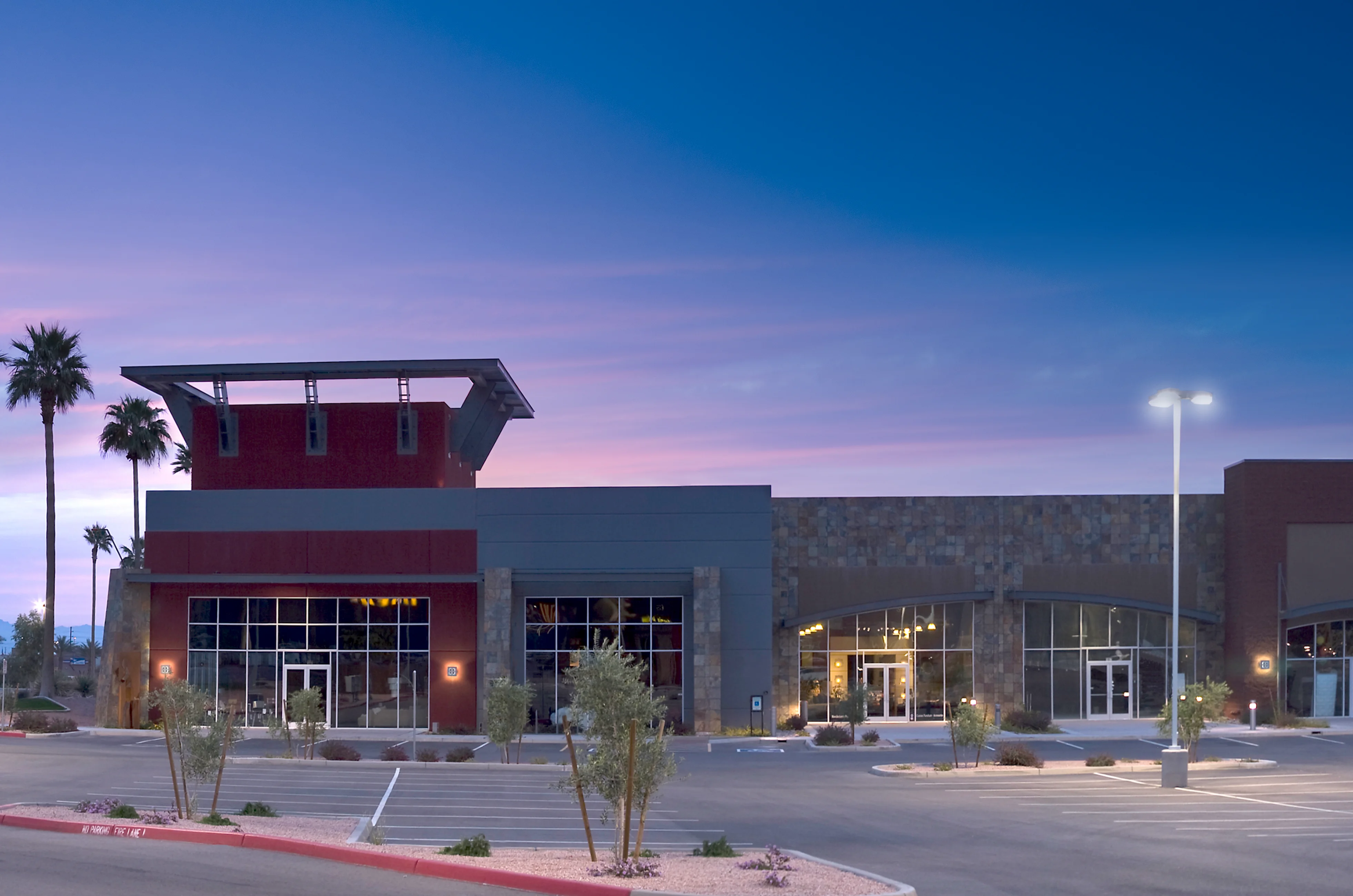
Retail and commercial centers are not secured by the simple presence of cameras, guards, or access control points. Security is determined by how detection, assessment, tracking, and identification are structured across entrances, parking areas, service corridors, storefront interfaces, rooftops, common areas, and surrounding airspace. These environments are designed for openness and convenience, which makes them operationally valuable, but also creates broad and often fragmented exposure.
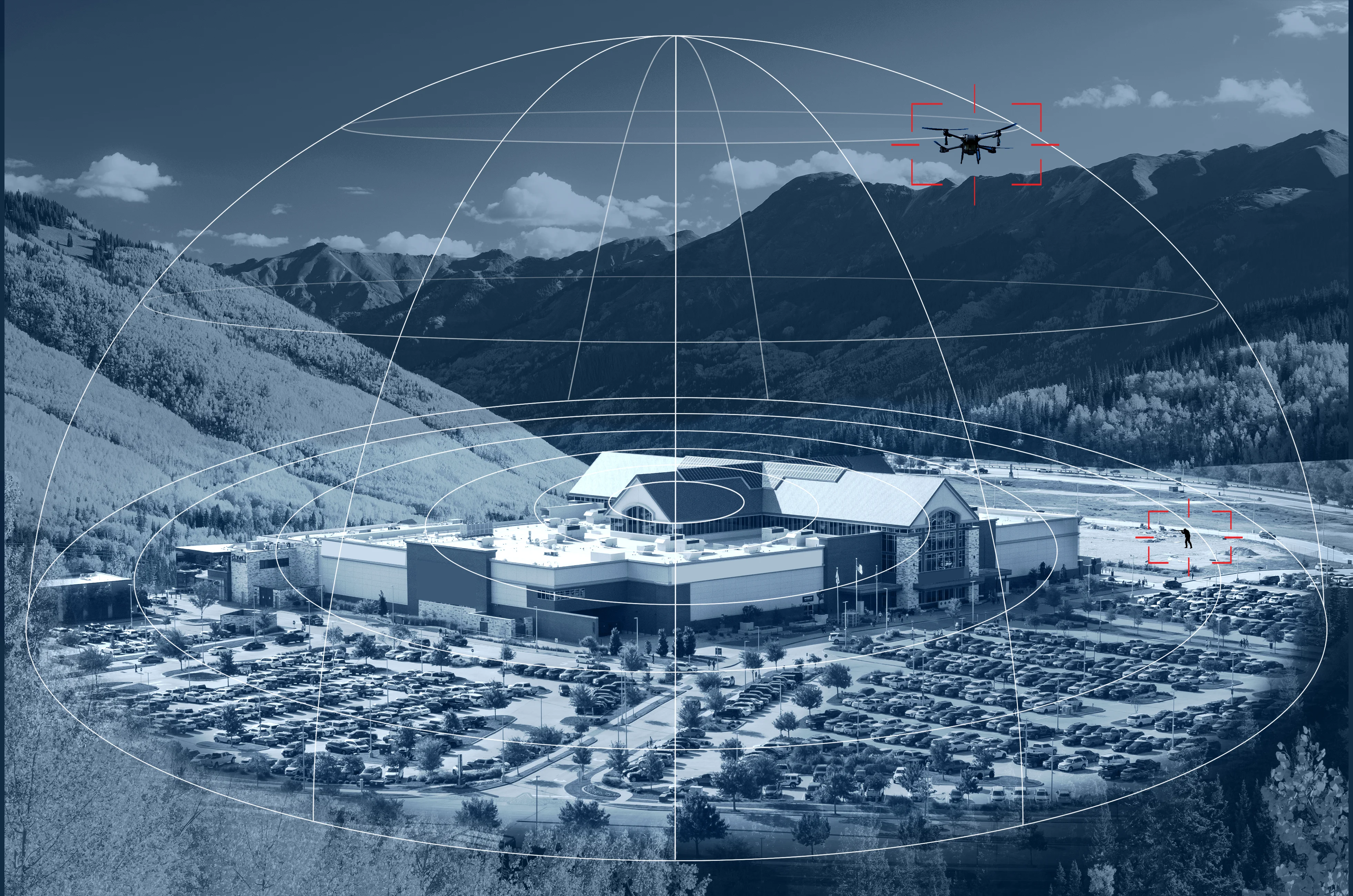
Effective security architecture must account for how threats move toward consequence. That includes activity approaching through vehicle access lanes, pedestrian corridors, loading and service areas, soft boundary conditions, and low-altitude airspace near rooftops, gathering spaces, and critical building systems. The objective is to create a layered system that improves awareness as a threat moves closer to people, operations, and high-consequence areas of the property.
A resilient retail and commercial security strategy begins with architecture that is designed as a system, not assembled as a collection of disconnected parts.
Defense Maturity Is Cumulative Across Ordered Layers
Methodology
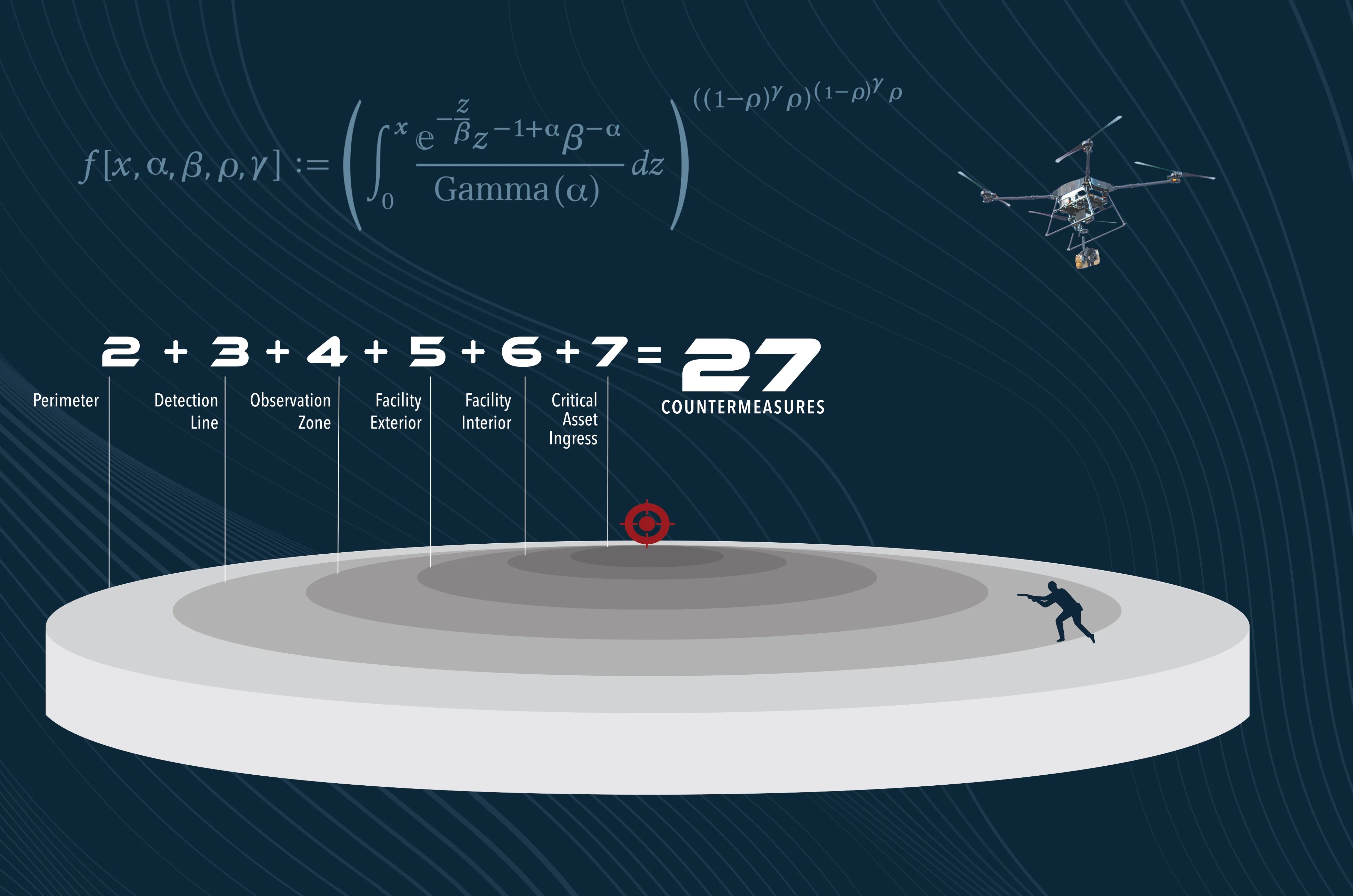
Security performance improves when defensive layers are intentionally ordered so that each layer contributes additional difficulty, clarity, and decision time. In retail and commercial environments, this means building a progression of coverage that supports earlier awareness across parking and perimeter-adjacent zones, stronger discrimination near public access points and tenant interfaces, and more reliable assessment around the areas where disruption or harm would carry the greatest operational consequence.
This is especially important in properties where large public volumes, multiple access points, shared control responsibilities, and dynamic daily activity can compress response windows. A resilient methodology cannot rely on a single boundary line, a single technology type, or a single assumption about how a threat will present itself. It must create continuity of awareness across ground and air so that weakness, delay, or ambiguity in one layer does not collapse the entire security picture.
Cumulative Defense Strategy applies this logic by organizing security into ordered layers that increase resistance as threat pathways converge on consequence.
Mathematical and Objective Consistency
Measurement
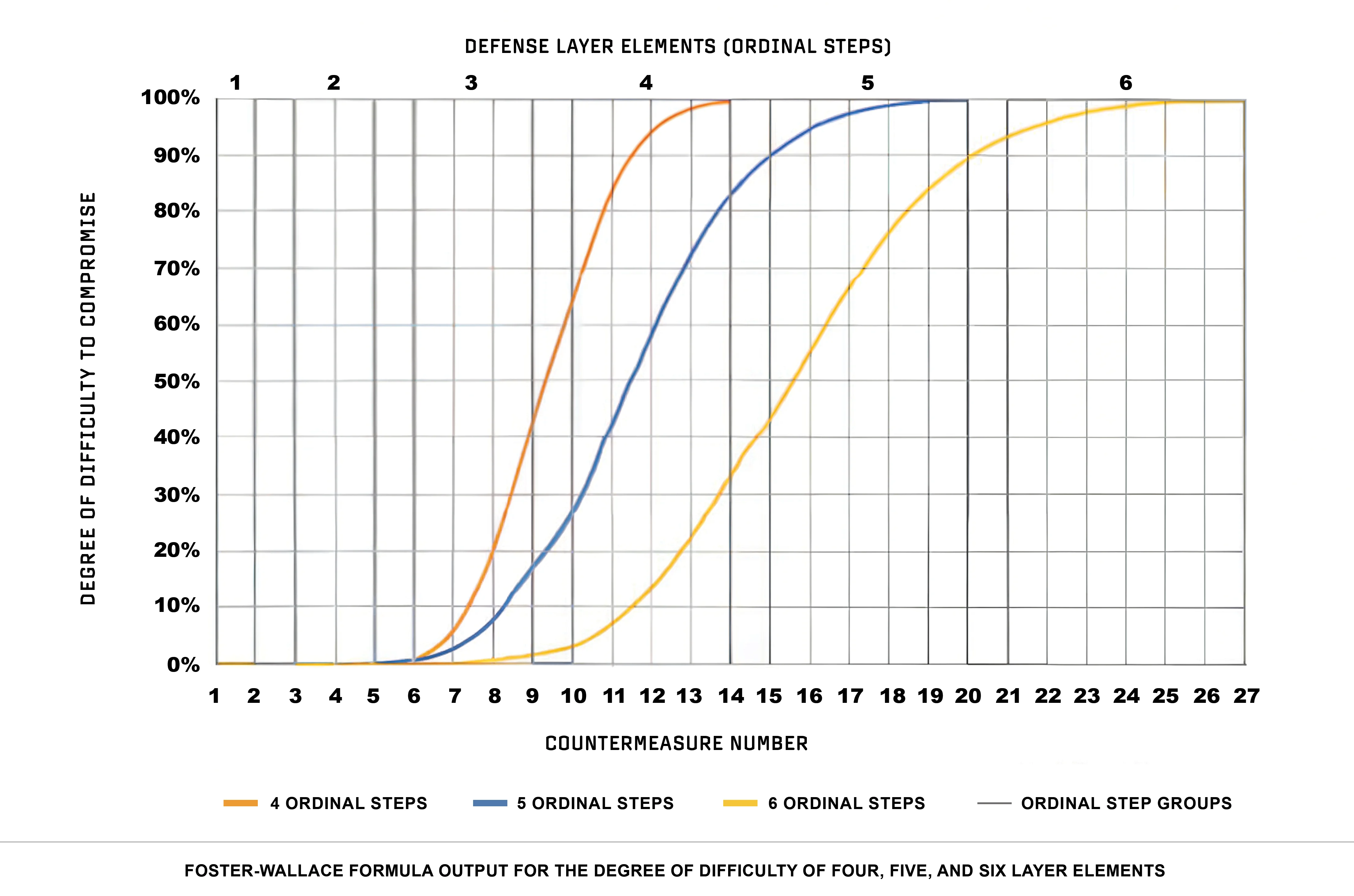
Security should be evaluated by measurable performance, not by appearance, assumption, or checklist completion. For retail and commercial centers, that means determining whether awareness, tracking integrity, identification quality, and response support actually improve across site layers under real operating conditions. A camera covering an entrance, a patrol route through a parking lot, or a detection zone drawn on a map does not by itself prove resilience.
Measurement must examine how the architecture performs across line-of-sight limitations, parked vehicle clutter, pedestrian density, lighting transitions, storefront reflections, rooftop conditions, and distance to high-consequence areas. It must also determine whether the property gains usable decision advantage as a threat advances, or whether security performance remains inconsistent until the point of consequence is already too close.
Objective consistency is what separates installed security from engineered resilience.
Architecture Responds to Gaps That Measurement Exposes
Architecture ➔ Measurement ➔ Application
Once performance is measured, security architecture can be adjusted with precision. At retail and commercial centers, that may mean strengthening early detection across parking and perimeter-adjacent zones, improving track continuity through likely approach paths, enhancing assessment capability near entrances and common spaces, or better integrating ground and air awareness into a single operating picture. The goal is not to add technology for its own sake. The goal is to close the gaps that measurement reveals.
This creates a more disciplined path to investment and a stronger path to resilience. Owners, operators, and property stakeholders can focus resources where improvement is demonstrable, consequence is highest, and decision time can be meaningfully extended.
Security architecture becomes more effective when it is applied in direct response to measured weakness.
A structured review of your site’s ground-to-air response posture, escalation pathways, and measurement framework, so you’re prepared before the next incident forces the issue.