Security for UAS

Measuring Airspace Security for UAS
A Framework for Evaluating Runway, Approach, and Near-Airport Resilience

Architecture
Security Is Determined by How Defense Is Structured
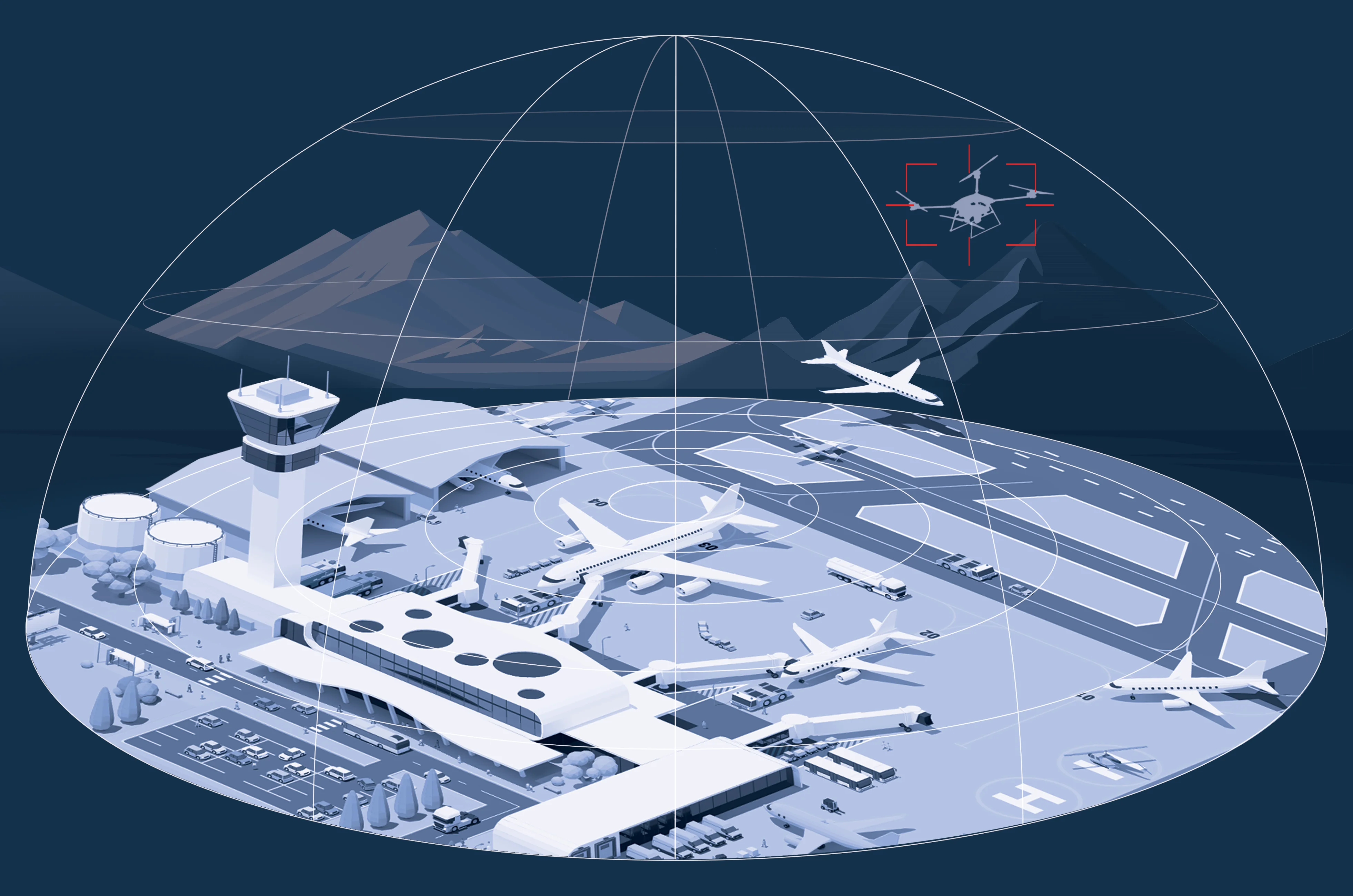
Airspace security effectiveness depends on how detection, tracking, and identification layers are structured across approach paths, low-altitude volumes, and critical operational zones as threats move closer to aircraft and infrastructure.
Architecture is more than the placement of sensors around an airport.
It defines whether approach corridors, runway environments, terminal airspace, and near-asset volumes are actually defended. Even layered systems are limited to isolated functions if the broader airspace architecture is not designed as a whole.
Security architecture is what creates defensible airspace.
Methodology
Airspace Defense Maturity Is Cumulative Across Ordered Layers
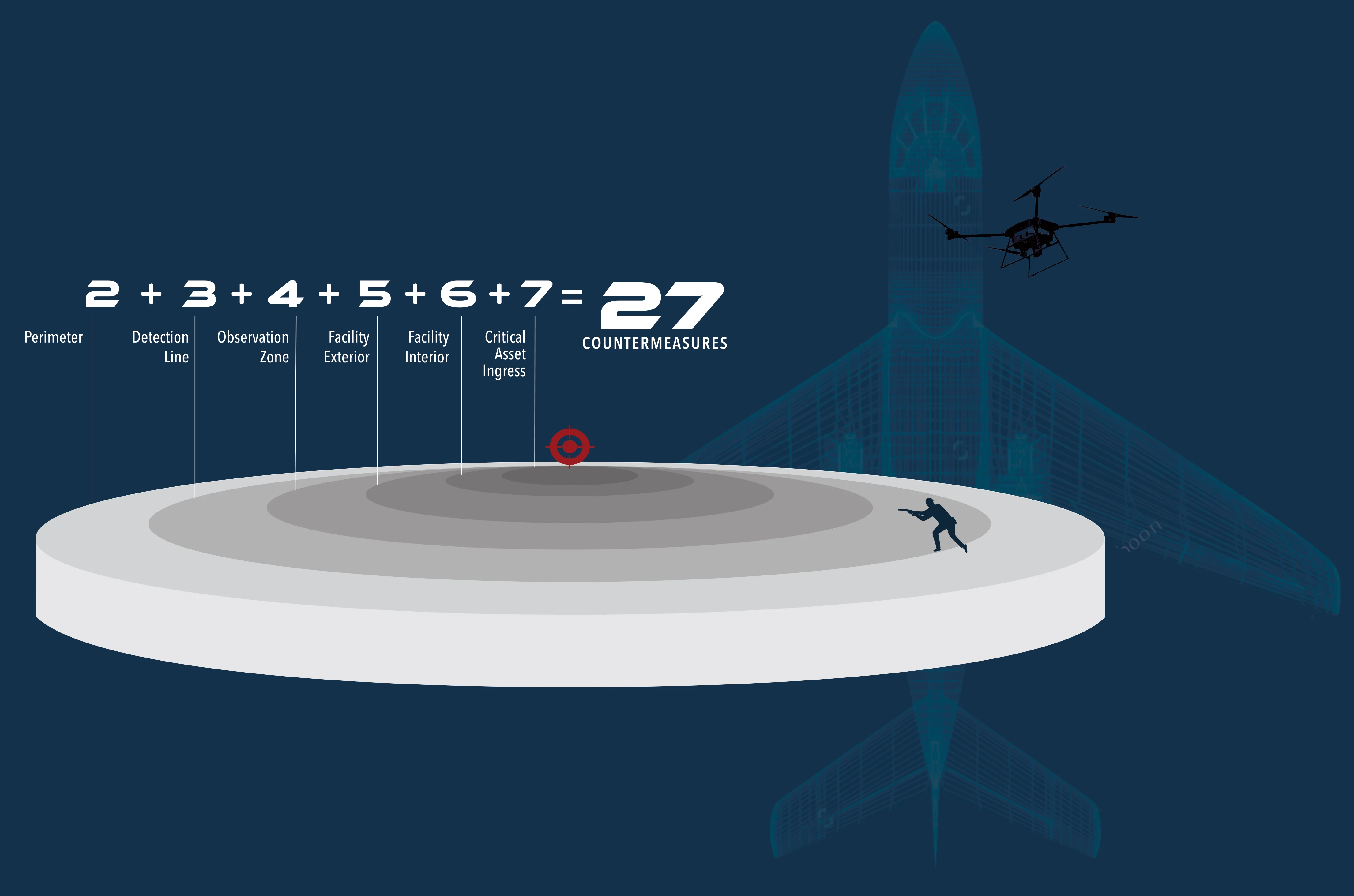
Effective airspace protection is achieved through sequential layers of defense, each increasing the difficulty of interference along defined approach paths and low-altitude volumes leading to aircraft, runways, and critical infrastructure.
To build operational resilience, each ordered layer must increase both the quality and coverage of detection, tracking, and identification capabilities as threats move closer to consequence.
This cumulative approach ensures that no single sensor failure results in loss of situational awareness and guards against known failure modes in complex airport environments.
This is the foundation of Cumulative Defense Strategy.
Measurement
Mathematical and Objective Consistency
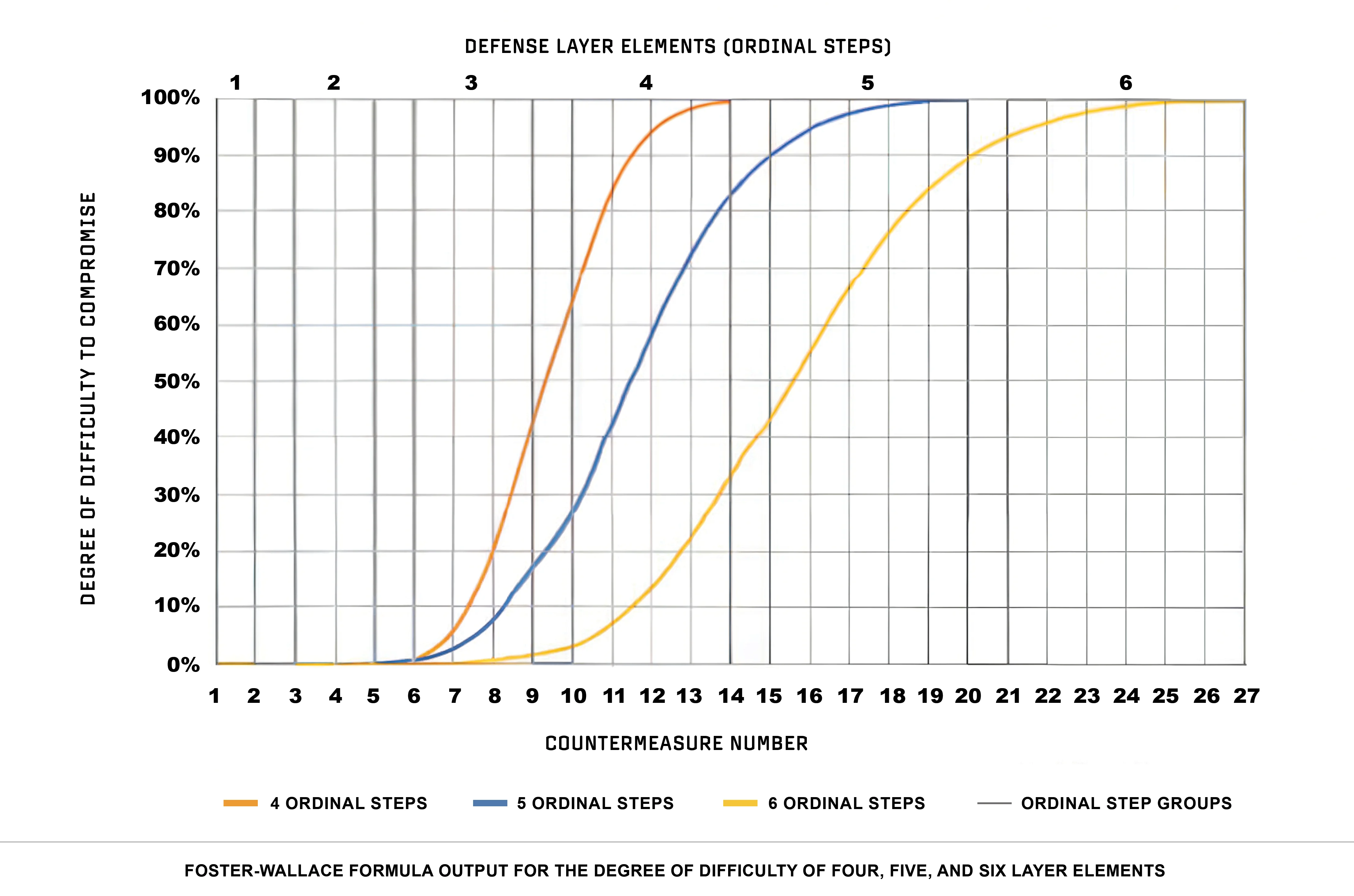
If defensive difficulty does not increase as threats move closer to aircraft, runways, and critical infrastructure, resilience cannot be claimed or measured. Compliance checks and system demonstrations show capability; they do not demonstrate operational resilience.
Measurement evaluates whether detection, tracking, and identification performance measurably improves across approach paths, low-altitude airspace, and near-asset volumes under real operating conditions—not controlled tests.
Without measurable improvement, maturity cannot be assumed and investment cannot be justified.
Cumulative Defense Strategy excerpt from ASCE 78-24
Application
Architecture Responds to Gaps That Measurement Exposes
Security architecture is modified where performance fails to improve across ordered defense layers protecting approach paths, airspace volumes, and near-asset environments.
Measurement identifies precisely where layers are insufficient, misaligned, or redundant, allowing investment to be applied only where it produces measurable risk reduction.
This approach replaces technology-driven deployments with outcome-driven design, while maintaining cost optimization across complex airport operating environments.
Cost-to-benefit calculations are part of the measurable outcome.